
Close Menu
Daily Guardian EuropeDaily Guardian Europe
  • Home
  • Europe
  • World
  • Politics
  • Business
  • Lifestyle
  • Sports
  • Travel
  • Environment
  • Culture
  • Press Release
  • Trending
What's On

Left edges ahead in Swedish election thriller – POLITICO

September 14, 2026

Le Pen vows to put French citizens first, tackle housing and cost-of-living crisis at first campaign speech

September 14, 2026

Succession row kicks off in Uganda after amateur goalkeeper says no to throne

September 14, 2026

Atokos: The tiny Greek island where people and wild boars swim in the sea and sunbathe together

September 14, 2026

Israeli minister threatens to strip Israeli directors of citizenship over Venice-winning Gaza doc ‘NAZA’

September 14, 2026
Facebook X (Twitter) Instagram
Web Stories
Facebook X (Twitter) Instagram
Daily Guardian Europe
Newsletter
  • Home
  • Europe
  • World
  • Politics
  • Business
  • Lifestyle
  • Sports
  • Travel
  • Environment
  • Culture
  • Press Release
  • Trending
Daily Guardian EuropeDaily Guardian Europe
Home»Business
Business

Oil surges past $108 as Hormuz attack and Saudi pipeline shutdown rattle markets

By staffSeptember 14, 20263 Mins Read
Oil surges past 8 as Hormuz attack and Saudi pipeline shutdown rattle markets
Share
Facebook Twitter LinkedIn Pinterest Email

Published on 14/09/2026 – 9:40 GMT+2•Updated
9:46

The oil market spent Monday morning pricing in a weekend of bad news from the Gulf.

Brent for October and November deliveries gained over 3% and crossed $108 a barrel, while the US benchmark WTI for October rose 2.3% to around $102, both extending last week’s advance after each reclaimed the $100 threshold.

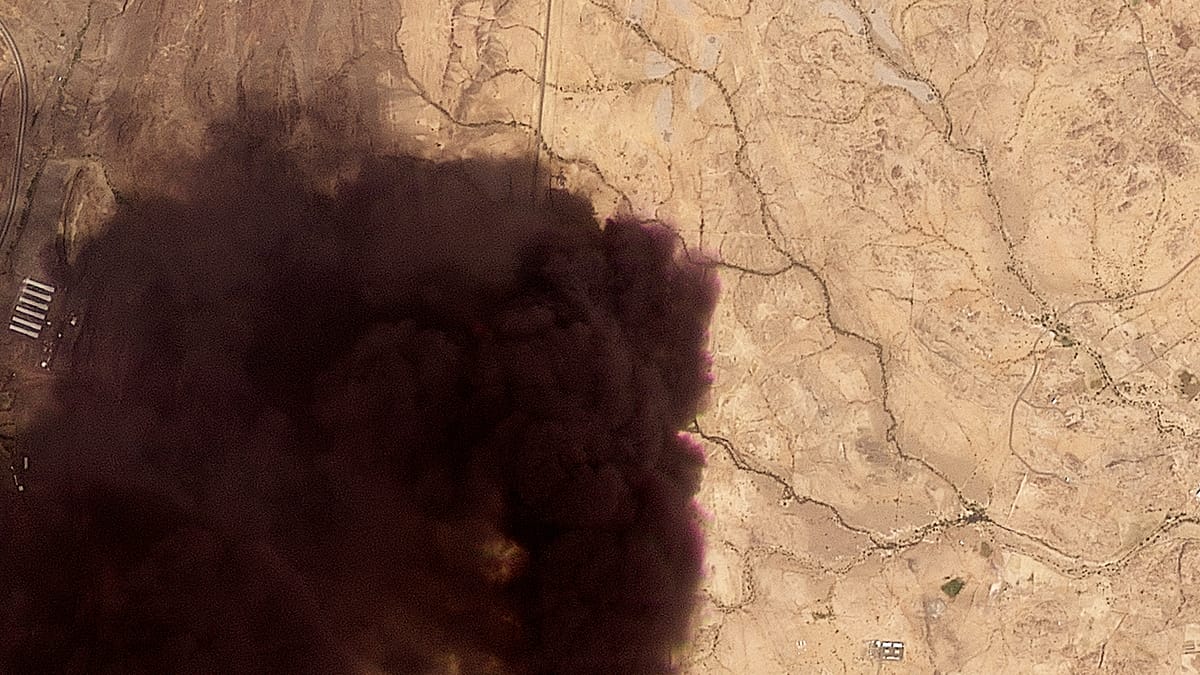
Prices moved following Saudi Arabia’s announcement that its East-West pipeline is temporarily closed after drone attacks.

The line carries crude across the kingdom to Red Sea ports, allowing oil to reach export terminals without passing through the Strait of Hormuz, so its loss removes the main alternative at the moment the strait itself is most dangerous.

That danger was also demonstrated on Sunday, when a merchant vessel was hit in the strait, killing one person and injuring three others, according to Iranian authorities.

Passage through the waterway now works very differently from before the war.

Vessels must obtain Iranian permission to transit, and Tehran is weighing a mechanism to charge service fees. Ships that fail to comply are routinely targeted, while US forces periodically bomb the Iranian coastline to contest Tehran’s claim to control the strait.

Diplomatic efforts have stalled too.

Oman has postponed planned talks between Iran and Gulf states on the future of the waterway, which carries a large share of the world’s seaborne oil trade.

Record fuel prices and finger-pointing

The consequences are extremely visible at American pumps.

The US national average price of diesel crossed $6 a gallon on Friday for the first time in history, up from around $5.85 a week earlier and roughly 60% above the $3.71 drivers paid a year ago.

Petrol is also averaging $4.22 after setting records over the Labor Day weekend.

US President Donald Trump has pointed the finger elsewhere.

Speaking to reporters in Ireland on Sunday, where he was attending the Irish Open at his Doonbeg golf resort, Trump stated Ukrainian President Volodymyr Zelenskyy “has to stop knocking out diesel fuel in Russia.”

“Let him go after targets, but not diesel fuel, because he’s causing a shortage of diesel fuel,” Trump added.

Ukraine has struck more than 20 Russian refinery targets this summer, prompting Moscow to ban diesel exports.

On the flight back from his state visit to Ireland this weekend, Trump reiterated the claim.

However, the supply arithmetic suggests otherwise.

Analysts attribute roughly 800,000 barrels a day of lost diesel supply to Russia’s export ban, against about 1.2 million from disruption around the Strait of Hormuz, according to Lipow Oil Associates.

The wider picture is more lopsided still as crude flows through the strait have fallen from around 20 million barrels a day before the war to about 7 million.

Between them, the two wars have also shut refineries representing around 5 million barrels a day of capacity.

Additional sources • AFP

Share. Facebook Twitter Pinterest LinkedIn Tumblr Email

Keep Reading

Donald Trump pledges to remove a 15% tariff on Irish whiskey

Capgemini sells US subsidiary criticised over ICE contract

Capgemini sells US unit criticised over ICE contract

How the ECB rate hike will affect mortgage borrowers

50 CEOs and investors urge Brussels not to dilute the EU Inc law

US inflation holds at 3.4% as monthly price rises hit fastest pace since May

Azerbaijan’s state oil fund helps launch China-ASEAN investment council

Economic growth: France lags behind its European neighbours

European bond yields hit multi-year highs as global sell-off continues

Editors Picks

Le Pen vows to put French citizens first, tackle housing and cost-of-living crisis at first campaign speech

September 14, 2026

Succession row kicks off in Uganda after amateur goalkeeper says no to throne

September 14, 2026

Atokos: The tiny Greek island where people and wild boars swim in the sea and sunbathe together

September 14, 2026

Israeli minister threatens to strip Israeli directors of citizenship over Venice-winning Gaza doc ‘NAZA’

September 14, 2026

Subscribe to News

Get the latest Europe and world news and updates directly to your inbox.

Latest News

EU fails to agree Russia sanctions rollover with one day to spare – POLITICO

September 14, 2026

Swedish centre-left holds slim election lead, but final result still too close to call

September 14, 2026

Video. Indonesia races to find 129 missing after Java Sea ferry capsizes

September 14, 2026
Facebook X (Twitter) Pinterest TikTok Instagram
© 2026 Daily Guardian Europe. All Rights Reserved.
  • Privacy Policy
  • Terms
  • Advertise
  • Contact

Type above and press Enter to search. Press Esc to cancel.