
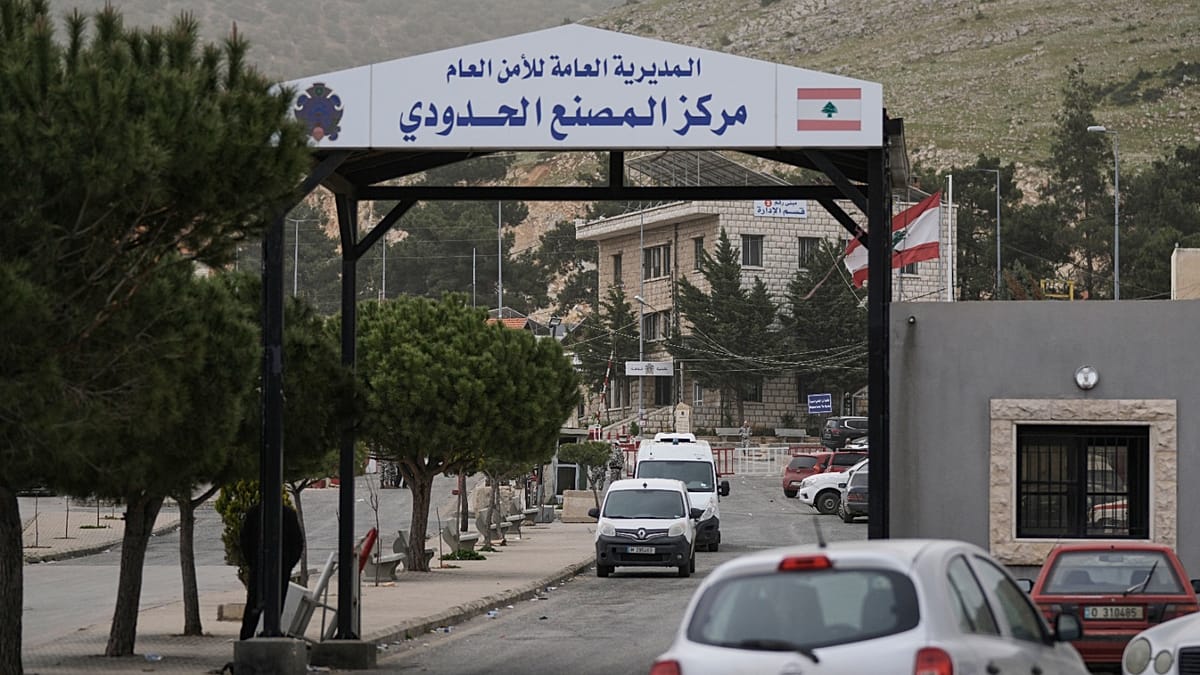
Syrian travellers crossing into Lebanon pay up to 60 times the official entry fee to brokers, fixers and travel agencies behind a profitable parallel market around Lebanese border procedures that have tightened sharply since Bashar al-Assad’s fall in December 2024.
A driver working the Damascus-Beirut route, speaking to Euronews on condition of anonymity for security reasons, described a system in which travel agencies in the Syrian capital, paperwork fixers at the crossing and partners in Beirut sell packaged entry solutions to Syrians who cannot navigate the official process alone.
Lebanon’s General Security Directorate charges up to $75 in official fees. The actual cost borne by travellers, according to Euronews’ sources, is nowhere near that figure.
A 48-hour stay arranged through the network costs $180, a week costs around $260 and a month runs to $400. A six-month option — currently suspended — was priced at $1,500, while arranging an annual residence costs approximately $4,700.
The difference between the official fee and what travellers actually pay goes to the fixers as “bribes” or “kickbacks” to facilitate paperwork and bypass requirements such as proving cash reserves, presenting a hotel booking, or producing an onward airline ticket.
The process runs on enforced discretion. Travellers must not reveal to Lebanese General Security personnel that a driver or agency arranged their paperwork.
“Revealing this relationship could lead to the driver’s arrest and a ban on his entering Lebanese territory,” the source said.
Under what he described as the “tourist group” arrangement, travellers must also surrender their passport or identity card to a guarantor or company representative for the duration of the stay, to be returned on departure. Those granted a “free document” arrangement can keep their papers.
Lebanon’s punishing penalties
Even categories of travellers who should theoretically benefit from smoother procedures are charged.
Holders of professional union cards, first-category commercial registrations or electronic visas for third countries are asked to pay a $60 “service fee” at the border on top of other costs, with waiting times that remain long and permitted stays that are kept short — 15 days for traders and union members, 24 hours for transit travellers.
The penalties for overstaying are punishing. Exceeding a one-month permit by a single day results in a $60 fine and a one-year ban from Lebanon. Violating a six-month residence limit costs $270 in fines, rising the longer the overstay continues.
Lebanon hosts an estimated 1.5 million Syrian refugees, the highest per capita refugee population in the world relative to the host country’s size.
Lebanese authorities have cited pressure on public services, the labour market and the broader refugee dossier as justification for restricting Syrian entry.
The procedures have tightened over several years and have intensified since the fall of al-Assad’s regime, which has drawn significant numbers of Syrians back toward the border.
The Syrian side of the crossing has become easier since December 2024. Checkpoints run by the Fourth Division and other Assad-era security units — notorious for extortion and harassment — have gone. The complications are now mostly on the Lebanese side.
Infrastructure issues not helping
Physical damage to infrastructure has added to the journey’s cost. Israeli air strikes before al-Assad’s fall destroyed the Daboussieh and Arida crossings, which remain closed.
Vehicles from Syria’s coastal cities must now travel a significantly longer inland route through Homs, Qusayr, Hermel and Baalbek before entering Lebanon.
The Jisr Qamar-Bekaa crossing is open only to pedestrians after sustaining damage. A car from Damascus to Beirut — 114 kilometres — costs around $100 one way.
The same journey from Latakia, forced along the detour, costs roughly $250, or $500 return, over what becomes up to 800 kilometres of travel.
The source said he and colleagues now frequently cross with only one or two passengers, whereas previously they would have filled a vehicle.
Before 2014, he recalled, a Syrian could present an identity card at the border and receive six months’ entry.
He said he hoped movement between the two countries would ease again, restoring business to drivers and opening up travel and tourism that the current system has effectively priced out of reach for many Syrians.
Euronews could not independently verify all figures provided by the source. Lebanese authorities had not responded to a request for comment at the time of publication.