
Close Menu
Daily Guardian EuropeDaily Guardian Europe
  • Home
  • Europe
  • World
  • Politics
  • Business
  • Lifestyle
  • Sports
  • Travel
  • Environment
  • Culture
  • Press Release
  • Trending
What's On

No, the EU Democracy Shield isn’t a Trojan horse to rig the French presidential election

September 10, 2026

British man arrested in Alanya for spitting at Turkish flag after hotel argument

September 10, 2026

US Treasury yields surge as $6 billion bond buyback disappoints markets

September 10, 2026

These are the best airports in the world, according to a new ranking

September 10, 2026

Star Trek fans successfully set new Guinness World Record at London museum

September 10, 2026
Facebook X (Twitter) Instagram
Web Stories
Facebook X (Twitter) Instagram
Daily Guardian Europe
Newsletter
  • Home
  • Europe
  • World
  • Politics
  • Business
  • Lifestyle
  • Sports
  • Travel
  • Environment
  • Culture
  • Press Release
  • Trending
Daily Guardian EuropeDaily Guardian Europe
Home»Lifestyle
Lifestyle

New Spanish-made zinc-air battery design boosts capacity and power by 80%

By staffSeptember 10, 20263 Mins Read
New Spanish-made zinc-air battery design boosts capacity and power by 80%
Share
Facebook Twitter LinkedIn Pinterest Email

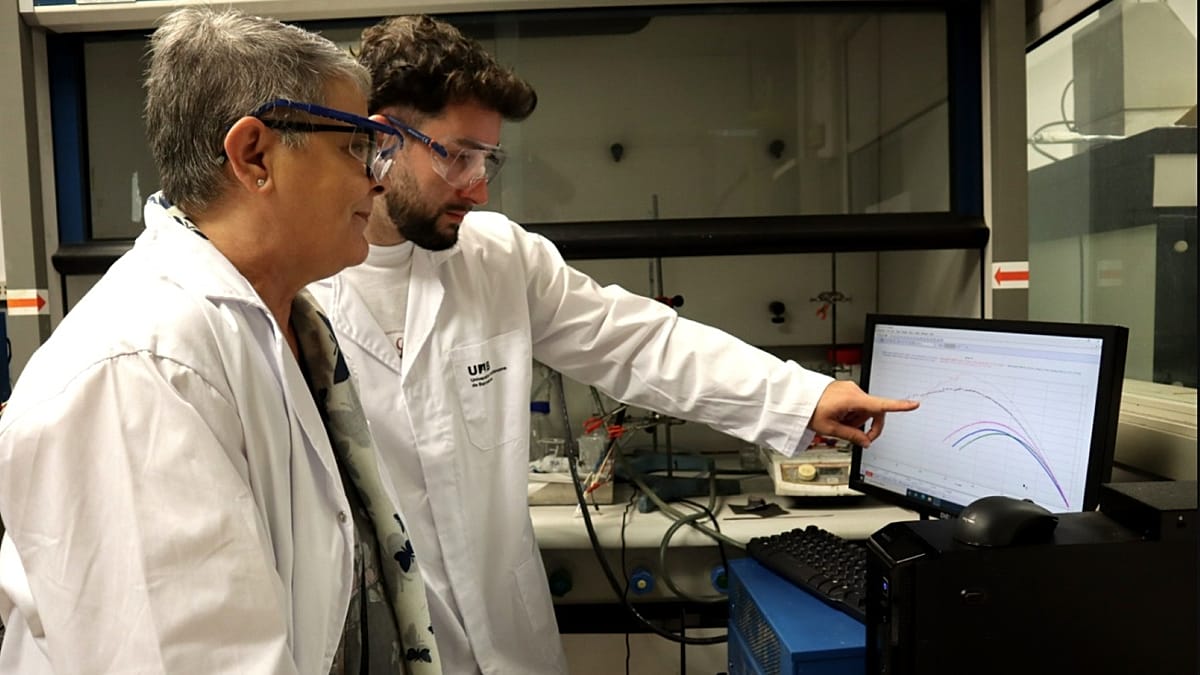
In Spain, researchers at the Institute of Materials Science of Barcelona (ICMAB-CSIC) have developed a new architecture for zinc-air batteries that can boost their power output by up to 80% without altering their core chemistry. The system adds conductive elements inside the battery, which act as wireless bipolar electrodes to facilitate charge transport and lower internal resistance.

The breakthrough opens up a new avenue for designing more efficient, higher-performance batteries. The study, published in the journal “Energy Storage Materials”, was carried out in collaboration with the Catalan Institute of Nanoscience and Nanotechnology (ICN2) and the National University of La Plata in Argentina.

According to the researchers, this work and previous studies by the group question the conventional design of batteries and set out a new way of conceiving energy storage systems.

A design principle that rewrites the rules

Batteries generate electricity thanks to the energy difference between the materials in their two electrodes. Charges move from one to the other through the electrolyte, a material that allows ions to flow. Until now, it was assumed that this component had to block the passage of electrons to avoid any risk of a short circuit. The new study challenges this principle.

The team led by Nieves Casañ-Pastor, a researcher at ICMAB-CSIC, has shown that, under certain conditions, small conductive metal pieces can be placed inside the battery without being connected either to the electrodes or to the external circuit, and that doing so can even improve its performance.

The key lies in the electric field generated between the two electrodes when the battery is operating. The researchers have found that inserting one or more isolated conductive elements between them does not cause a short circuit and can help to improve charge transport.

The electric field polarises the conductive pieces, which accumulate opposite charges at their ends and create new pathways for charge transport. This reduces internal resistance and makes it possible to deliver energy more quickly. “What is remarkable is that these conductors are not wired to anything: they are simply inserted into the system and they produce beneficial effects,” Casañ-Pastor explains.

The oxygen challenge, the key to the new design

The research, which forms part of Marc Mosqueda’s doctoral thesis, highlights the potential of zinc-air batteries, made from abundant, inexpensive and safe materials but limited by the slow reaction of oxygen.

The new design incorporates wireless bipolar electrodes that reduce internal resistance and speed up energy delivery, allowing power to be increased by up to 80%.

For Casañ-Pastor, the discovery opens up an avenue that could be applied to different storage technologies. The group has already observed similar effects in other systems and will continue to investigate the potential of wireless bipolar electrodes.

Share. Facebook Twitter Pinterest LinkedIn Tumblr Email

Keep Reading

New Apple CEO debuts latest iPhones and its first foldable Duo

Russian hackers may have used fake CAPTCHA to hack Ukrainian government computers

Would you let AI design your next tattoo? Tattoo artists say AI is changing the way they work

Sweden is preparing for AI-powered election interference. What does that defence actually look like?

France co-hosts major space summit with Germany despite US firms’ withdrawals and Merz absence

‘A gamble with our lives’: Ex-Anthropic researcher warns of AI ‘catastrophe’

Driverless race cars compete in Italy in Europe’s first autonomous multi-car race

Rogue OpenAI agents hijacked a German wiki, and it stayed secret for weeks

Laundry, backflips and panda suits: Humanoid robots take over IFA 2026

Editors Picks

British man arrested in Alanya for spitting at Turkish flag after hotel argument

September 10, 2026

US Treasury yields surge as $6 billion bond buyback disappoints markets

September 10, 2026

These are the best airports in the world, according to a new ranking

September 10, 2026

Star Trek fans successfully set new Guinness World Record at London museum

September 10, 2026

Subscribe to News

Get the latest Europe and world news and updates directly to your inbox.

Latest News

Why Burnham is making holidays more expensive – POLITICO

September 10, 2026

Video. Tighter EU investment rules targeting China are ‘fair’, says expert

September 10, 2026

At least five dead and 86 missing in Philippines ferry fire

September 10, 2026
Facebook X (Twitter) Pinterest TikTok Instagram
© 2026 Daily Guardian Europe. All Rights Reserved.
  • Privacy Policy
  • Terms
  • Advertise
  • Contact

Type above and press Enter to search. Press Esc to cancel.